
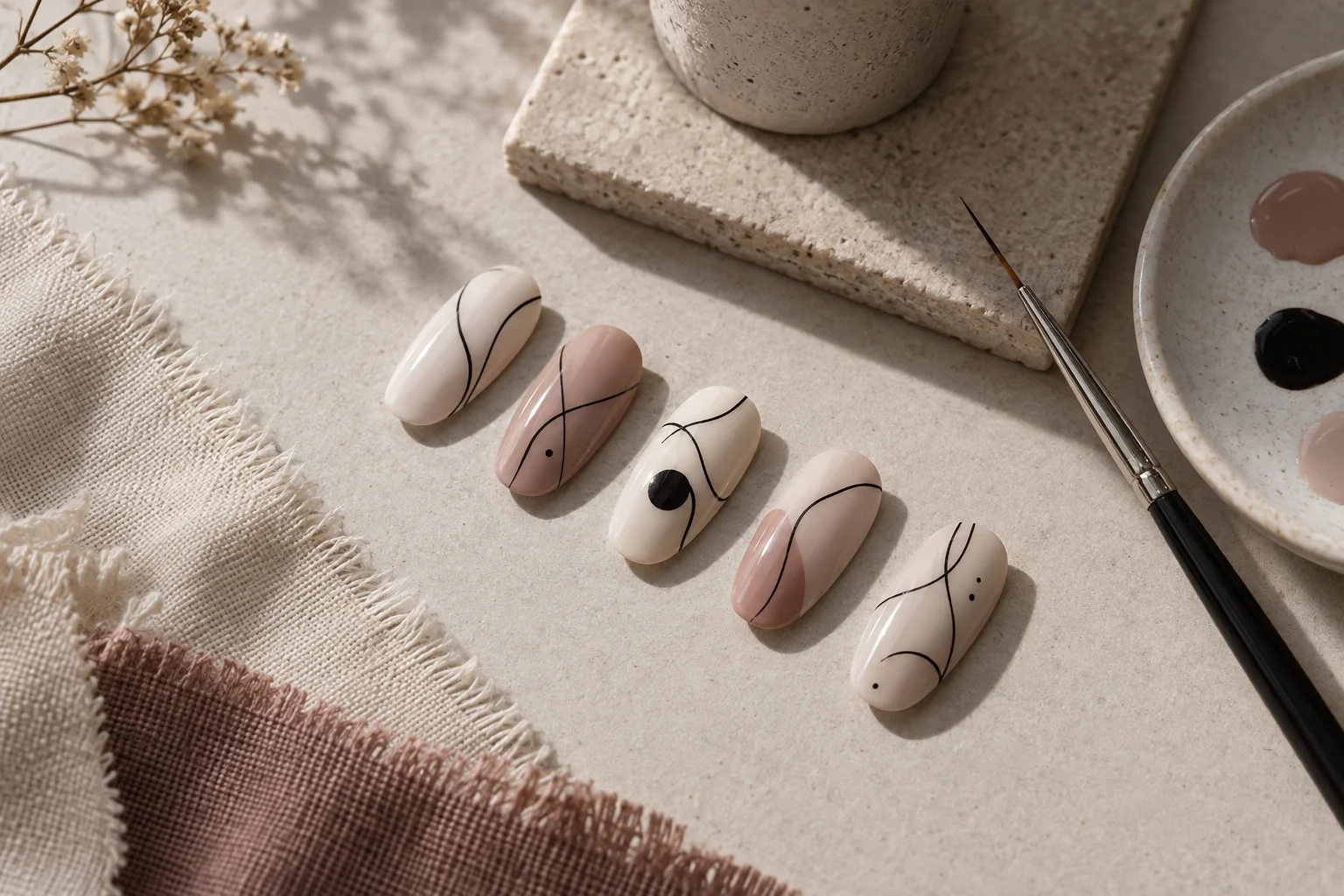
Miss Pop’s documented runway work shows how a fashion idea can become nail art without copying an entire outfit. The translation happens through lines, color placement, and the space left around them. For Moschino’s Spring/Summer 2019 collection, that meant black scribbles inspired by fashion sketches, according to NAILS’ 2018 report. This historical profile draws on a published interview and two runway reports to explore her approach—and help you describe the details you want to adapt with your own nail artist.
Start with the collection, not a finished manicure
In Coveteur’s September 13, 2016 interview, Miss Pop described beginning correspondence with designers roughly six weeks ahead of their shows. She asked about shapes, prints, colors, and inspiration, painted samples, and refined them collaboratively as the collection developed. She also considered the imagined person wearing the clothes.
One example makes that process tangible. After seeing sheer tights and white Mary Janes, she reconsidered earlier samples and translated those accessories into sheer color and a strapped French-tip concept.
The useful distinction is between copying an object and borrowing its visual structure. In this example, sheerness became part of the nail’s background, while a strap supplied the idea for a line. A small detail could carry the reference without reproducing the whole outfit.
That is an editorial reading of her historical account, not a claim that she follows an identical process for every project today.
Moschino: preserve the energy of the sketch
NAILS’ September 24, 2018 report credits Miss Pop for Essie with the graphic scribble manicure for Moschino’s Spring/Summer 2019 collection. Her explanation connects the design to Jeremy Scott’s fashion sketches and the roughly drawn patterns on the clothing. The dates describe different things: the coverage appeared in 2018; Spring/Summer 2019 was the collection season.
The published method uses black Essie Licorice applied with a striping brush over base coat, followed by top coat. This is a historical product credit, not a current shopping recommendation or evidence of an ongoing brand relationship.
The design offers two details worth separating when studying a reference. First, the loose black marks carry the sketchbook idea. Second, the visible background gives those marks room rather than filling the entire nail with color. Changing either would change the composition: dense coverage and widely spaced strokes are different requests, even if both use black lines.
Negative space is the area a design leaves visually open. It does not necessarily mean an uncoated nail: the reported Moschino method included base coat and top coat. For a consultation, “visible nail between the lines” is more precise than asking for sections to be completely bare.
Before requesting a recreation, identify what attracts you most: the scribbled character, the contrast, or the openness. That priority gives your artist a clearer starting point than the design’s name alone.
Prabal Gurung: give color a defined place
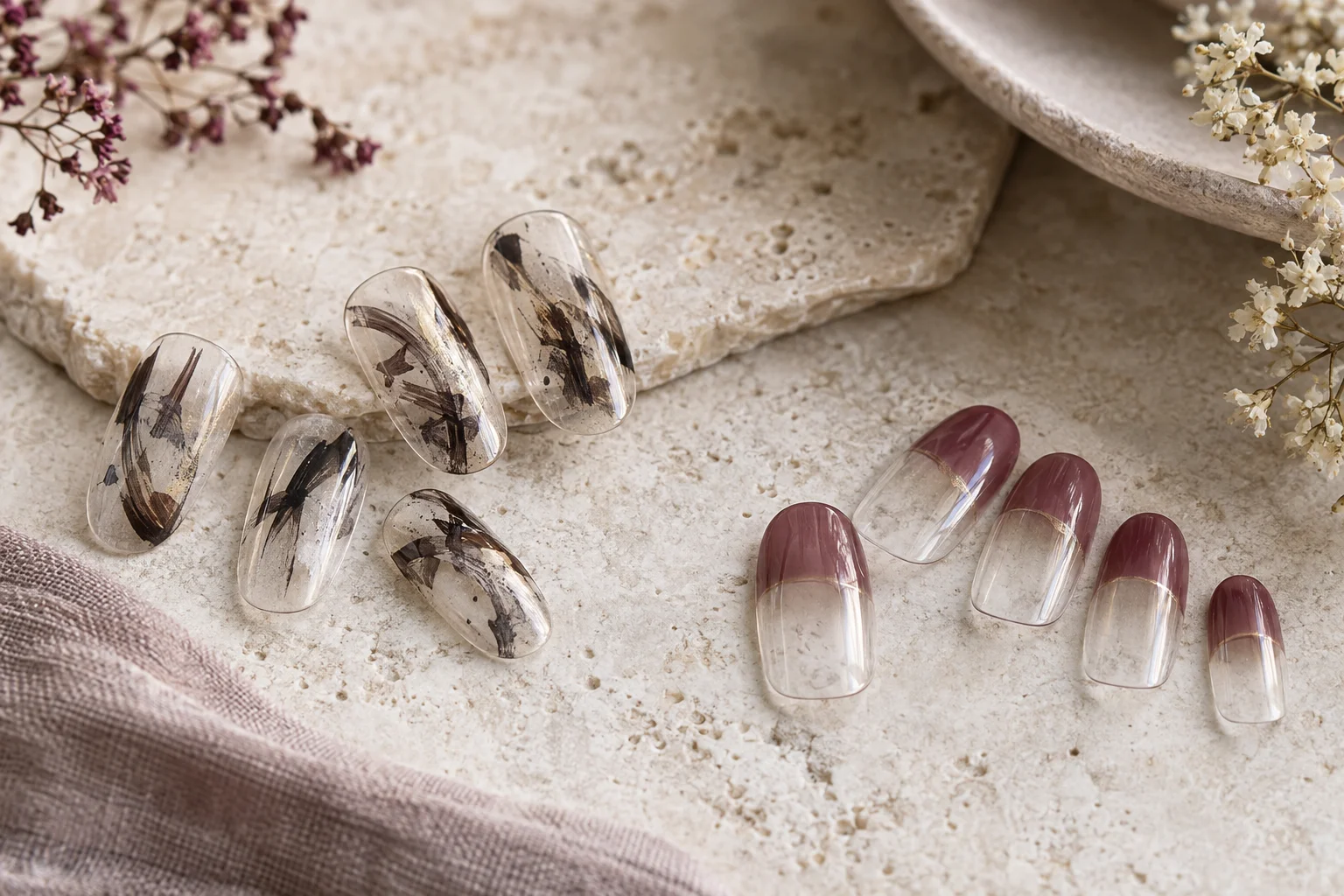
A different use of space appears in Beauty Launchpad’s February 17, 2020 report on Miss Pop’s work with Zoya for Prabal Gurung and Oscar de la Renta’s Autumn/Winter 2020 shows. For Prabal Gurung, the published instructions place Zoya Alyssa on the top half of the nail, leaving negative space below.
Where the Moschino design distributes separate marks across an open background, this look assigns color to one defined area. The contrast is useful: negative space can sit between strokes, or it can form a larger uninterrupted section.
The report’s two designer examples should not be conflated. Its Oscar de la Renta instructions apply Alyssa across the nail, so that look is not another negative-space example simply because the headline uses the term.
Look beyond the shade when saving an inspiration image. Ask where the color begins and ends, and how much of the background remains visible. Those choices are part of the design, not incidental gaps to fill.
Turn a reference into a usable design brief
The following is editorial guidance inspired by these examples, not advice quoted from Miss Pop. Use it to explain your preferences before an appointment.
Identify the detail you want to preserve
Choose the reference’s most important feature: sketch-like lines, a sharply defined area of color, or generous open space. If you like several elements, put them in priority order. That gives the artist a basis for suggesting changes without losing what drew you to the image.
Describe color and placement separately
“Black lines” specifies a color and a mark, but not a layout. Do you want the marks spread across each nail, concentrated near the tips, or limited to accent nails? If you prefer a different palette, ask how it would change the contrast you like in the reference.
Point out what should remain visible
Show the artist the open areas rather than relying on “negative space” alone. Say whether you prefer substantial visible background or denser linework, and ask what base appearance they propose.
Hypothetical consultation wording: “I like the loose black lines and the visible space between them. Could we adapt those details to my preferred nail length, keeping the design fairly open?”
This request preserves an intention while leaving room for an adaptation. It does not ask the artist to treat a runway image as an exact template regardless of your preferred length and shape.
Confirm the design and service before booking
Send your reference before booking, with a short explanation of what matters most. Ask whether the provider can attempt that style of linework or color placement, and what they would change for your preferred nail length and shape. Then confirm the proposed service, appointment time, and quoted price.
Keep the artwork separate from the underlying service. A request for scribbles does not specify whether you want color alone, added structure, or extensions. If you are unsure how to frame that part of the conversation, our guide to gel polish and gel overlays explains the distinction.
A historical runway credit does not establish that a particular salon offers the design. Likewise, these reports do not establish current product availability or continuing brand partnerships. Use the images as creative references, then confirm what your chosen provider can offer.
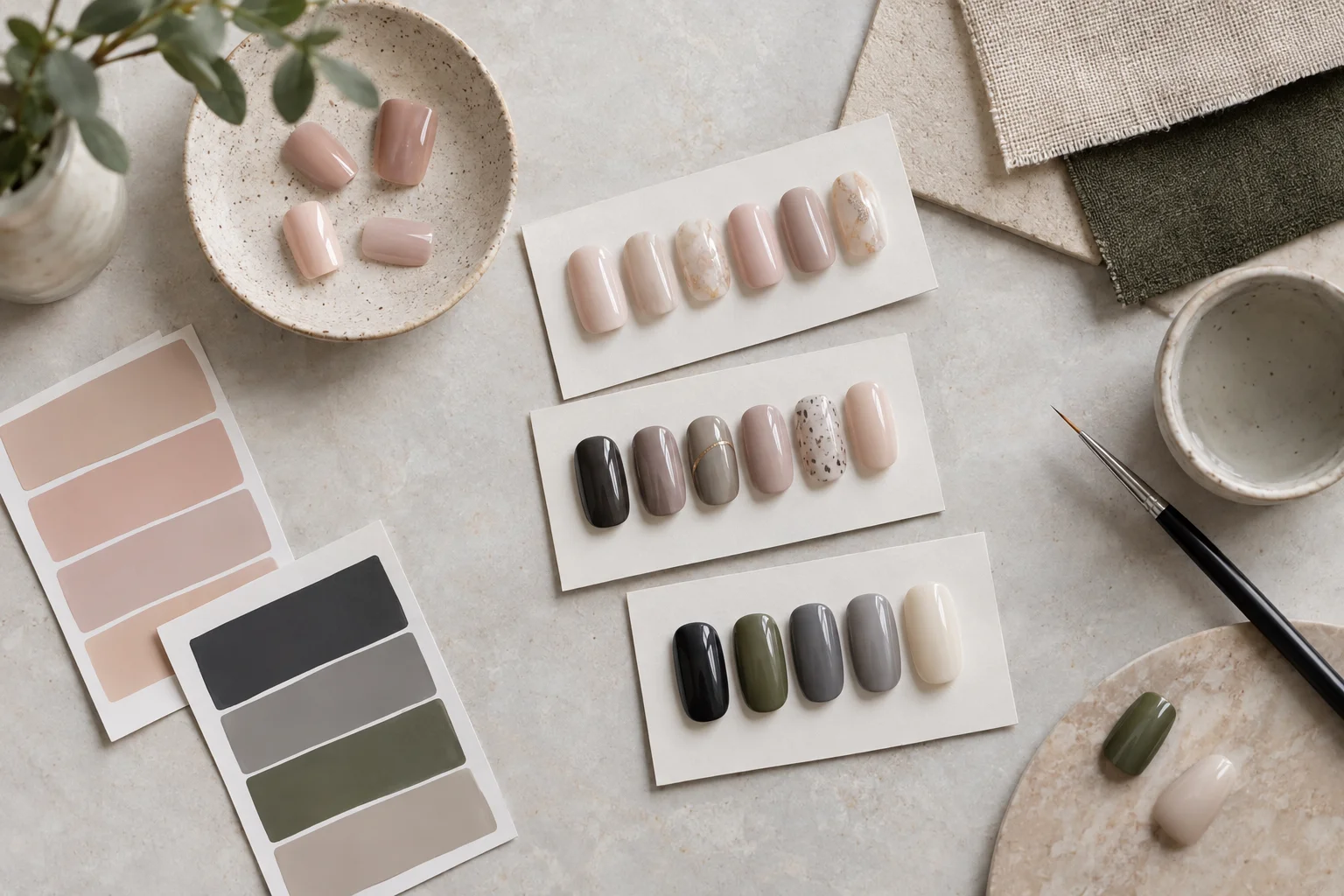
The useful lesson from these Miss Pop nail art examples is to describe the decisions behind a look: what inspired the marks, where the color sits, and what remains visible. Bring those observations alongside your reference image. They give a nail artist something specific to discuss, preserve, or adapt.