
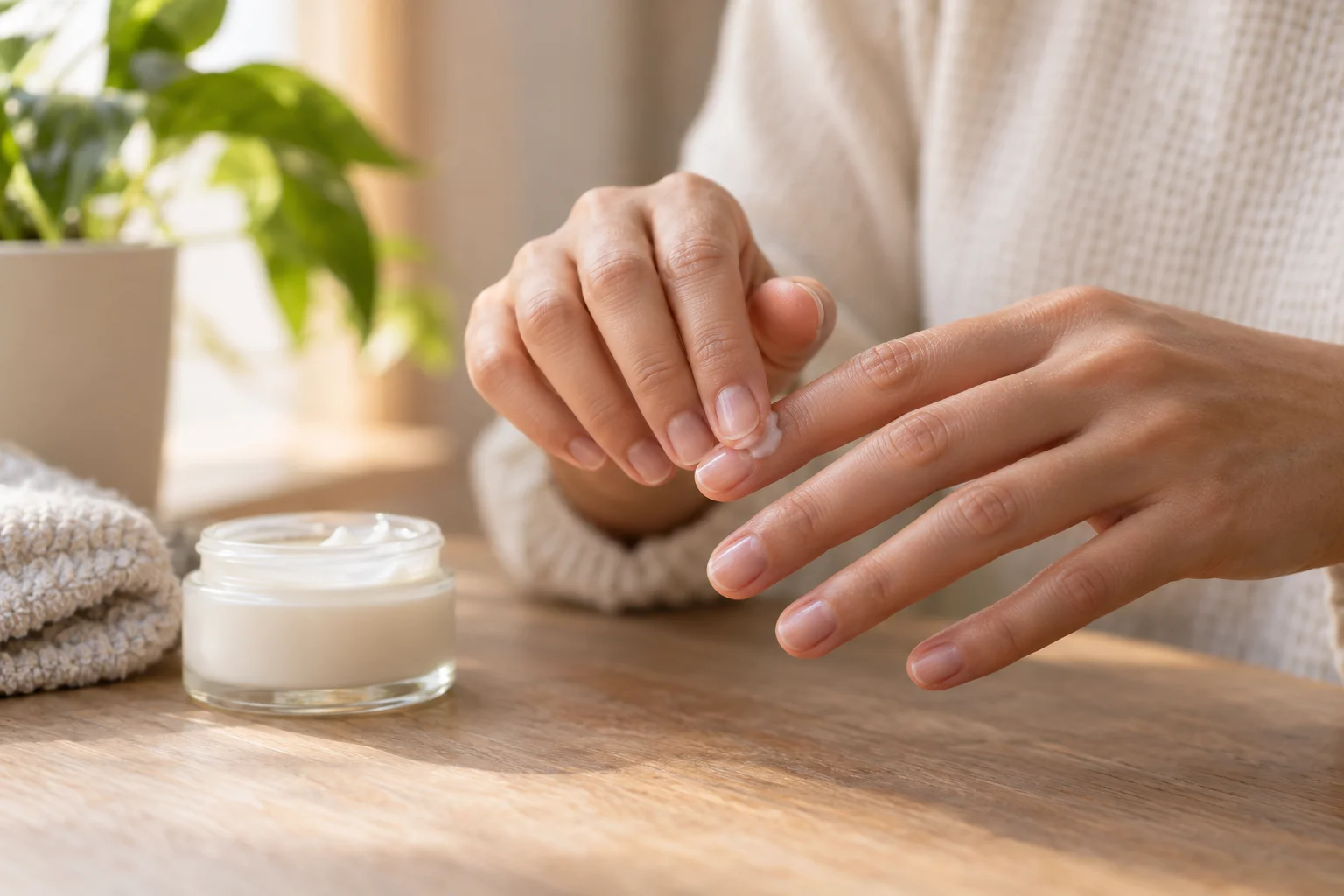
For cuticle care between manicures, make moisturizing—not removal—the routine. Moisturize after handwashing, wear gloves for wet chores, and leave cuticles intact rather than cutting or pushing them back. These recommendations come from the American Academy of Dermatology’s (AAD) healthy-nail tips and nail-trimming guidance.
Here’s how those choices compare, how to fit care into your day, and what to say before your next manicure. This guide draws on three AAD consumer resources, not product testing, and does not diagnose nail or skin concerns.
Moisturizing versus cutting, pushing, and picking
Cuticles have a protective purpose. The AAD explains that they protect the nail root and that cutting them can make it easier for germs to enter. Its nail-trimming guidance advises against both cutting cuticles and pushing them back—even if the goal is a neater-looking border around your polish.
| Approach | Place in your routine | Key limitation |
|---|---|---|
| Moisturizing | Recommended for dry hands, nails, and cuticles, including after washing. | This is care for dryness, not a promise of nail repair or longer manicure wear. |
| Cutting | Skip routine cuticle trimming. | Removing this protective tissue can make it easier for germs to enter. |
| Pushing back | Do not use pushing as an alternative to cutting. | The AAD advises leaving cuticles alone rather than pushing them back. |
| Picking | Leave uneven-looking edges alone rather than pulling at them. | This is a practical application of the leave-alone guidance, not a separately tested comparison. |
The moisturizing advice comes from the AAD’s skin, hair, and nail-care announcement; the cutting and pushing recommendations come from its nail-trimming guidance above.
The distinction is care versus removal. Moisturizing does not have to create the appearance of freshly trimmed cuticles to be useful. And a technique does not fit the leave-alone recommendation simply because it uses no cutting tool.
Build care around handwashing and chores
You do not need a separate daily cuticle-grooming session. Use activities already in your day as reminders.
- After handwashing, moisturize. Include your nails and cuticle area rather than stopping at the backs of your hands. The AAD’s 2022 care announcement recommends an ointment-based moisturizer, such as petroleum jelly, for dry hands, nails, and cuticles after washing.
- Keep the moisturizer within reach. Place it where you finish washing or carry it in a bag you use regularly. This is a convenience suggestion, not a prescribed application schedule.
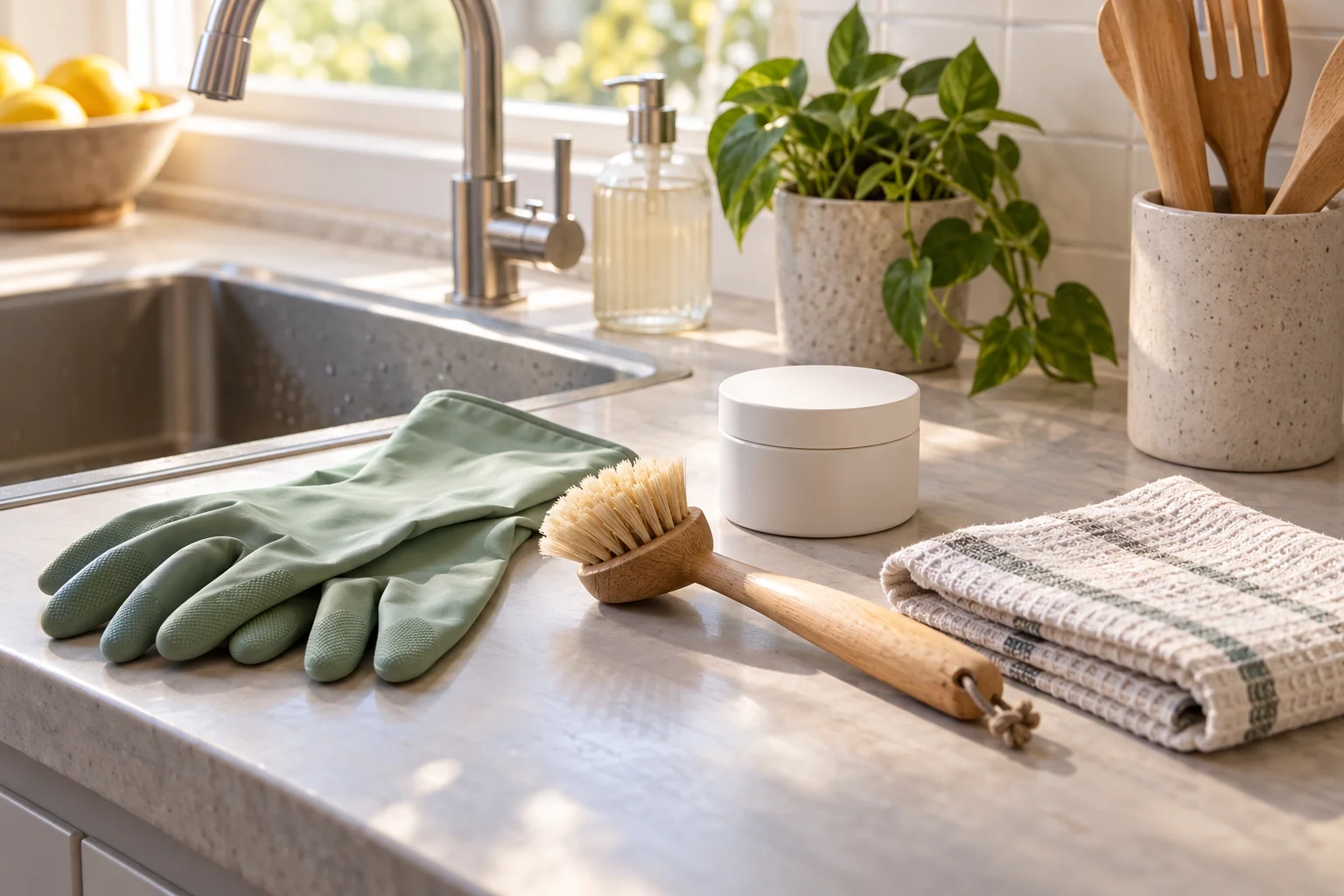
- Wear gloves for dishes and cleaning. The AAD’s healthy-nail tips recommend gloves to limit excessive water exposure during these tasks. Gloves complement normal handwashing; they do not replace it.
- Pause when you feel tempted to pick. An uneven appearance is not a reason to add cutting or pushing to the routine. Pain, swelling, or a nail change calls for assessment rather than more cosmetic grooming.
A practical setup could be moisturizer near your hand towel and household gloves beside your dishwashing supplies. The aim is to make the recommended habits easy to remember—not to add soaking, scraping, or pushing steps.
Do you need a specialty cuticle product?
The AAD’s ointment example gives you an unbranded starting point. The selected guidance does not establish that a cuticle oil outperforms an ointment, specify an ideal formula, or show that either extends manicure wear. There is no supported product ranking here: choose for everyday moisturizing rather than a promised transformation.
What to ask your technician before preparation begins
Discuss your preference before tools touch the nail area. “Gentle cuticle work” leaves room for interpretation; naming the steps you want omitted is clearer.
First, ask what preparation includes
Suggested wording: “Can you explain what your cuticle-preparation step involves before we start?”
Listen for the actual actions rather than relying on the service name. Then ask whether the planned manicure can be performed with your preferences. Do not assume every salon offers the same preparation options.
State what you want skipped
Suggested wording: “Please leave my cuticles intact—no cutting or pushing them back.”
This translates the AAD’s leave-alone recommendation into a specific request. If the proposed service does not fit that preference, clarify the alternatives before agreeing to proceed. You can also choose not to have the service.
Keep a new concern separate from a cosmetic request
Suggested wording: “I’ve noticed a change since my last appointment. I want to have it checked before deciding on another cosmetic service.”
Describe what you noticed and when, without trying to name a condition. Asking for a neater appearance is different from seeking an explanation for pain or a changing nail.
If you are also choosing a coating, clarify gel polish versus a gel overlay separately. What goes on your nails and how the surrounding area is prepared are distinct parts of the appointment conversation.

When to contact a dermatologist instead
Do not treat another manicure as the answer to an unexplained nail change. The AAD recommends seeing a dermatologist for changes in nail color, texture, or shape in its nail-care guidance. Its healthy-nail tips also identify swelling and pain as reasons to seek assessment, with particular emphasis on getting nail problems checked if you have diabetes or poor circulation.
These signs do not establish a diagnosis. They mean the next step should be assessment rather than deciding how to trim, conceal, or polish the area.
To prepare for that conversation, note what looks or feels different, when you first noticed it, and which recent nail services or products you used. You do not need to identify the cause yourself. This guide does not set a waiting period or offer home treatment.
Frequently asked questions
What if a piece of skin looks loose enough to trim?
Do not use appearance alone—or this guide—as permission to cut. The selected sources do not provide a method for distinguishing loose hangnails from tissue that should remain intact. The AAD advises leaving cuticles alone; pain, swelling, or nail changes warrant a dermatologist’s assessment rather than DIY trimming.
A useful between-manicure routine does not require a perfectly cleared nail border. Focus on moisturizing and chore protection, then tell your technician which preparation steps you want skipped. For related everyday guidance, explore the Nail Care & Maintenance resources.