
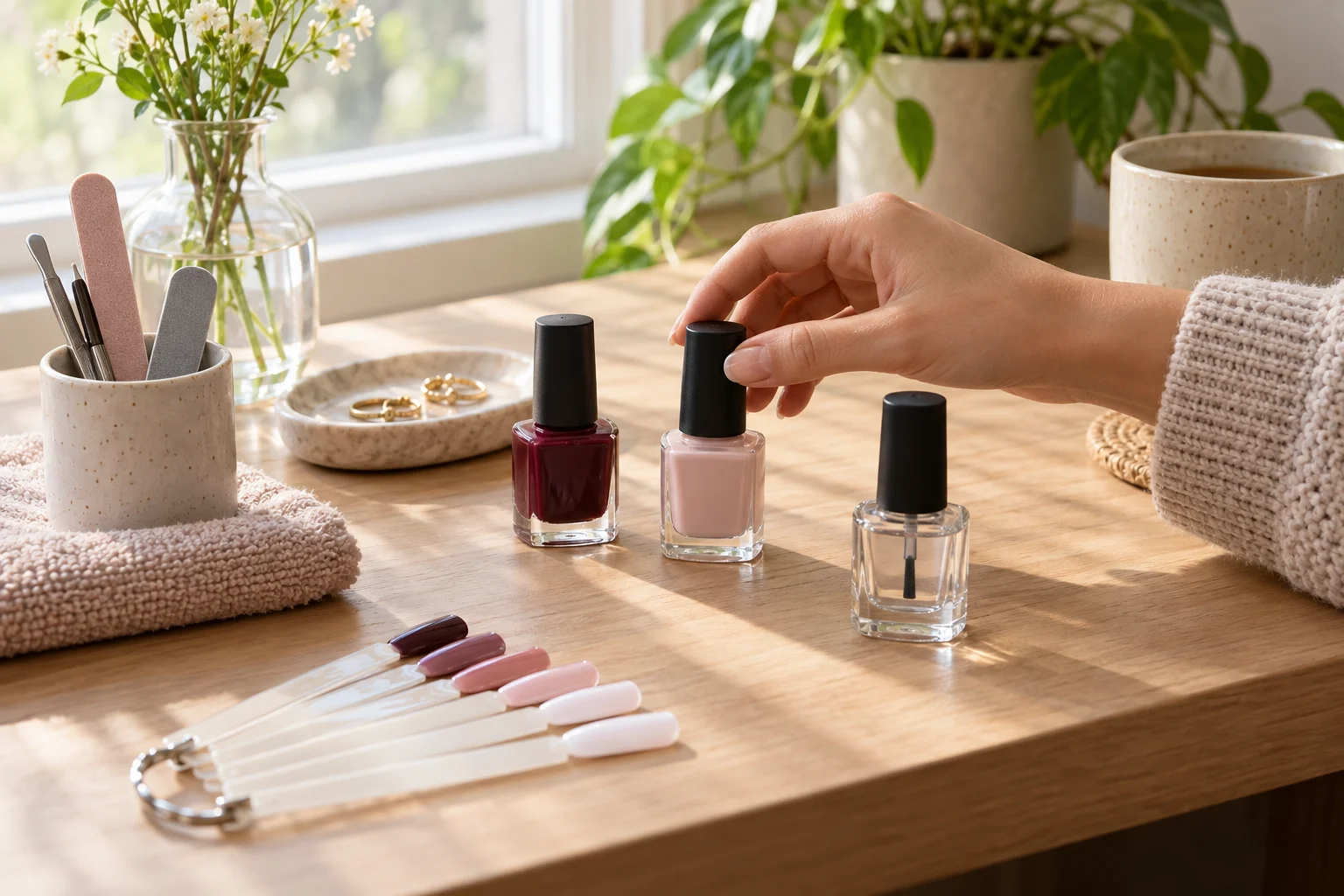
Choosing No-Lamp Nail Polish: Quick-Dry Color or a Longwear System?
Choose quick-dry color if frequent shade changes and a simple routine matter most—but check how many products it actually requires. Consider a coordinated longwear system if you are willing to follow its matching-product, application, and maintenance instructions. For no-lamp nail polish, the useful comparison is the complete routine, not the largest advertised wear number.
This guide compares manufacturer instructions, not hands-on testing. Gel by essie and OPI Infinite Shine are documented longwear examples; quick-dry color is covered through buying criteria rather than a product-specific review. Published drying and wear claims do not establish which polish performs better.
“Gel-like” does not automatically mean you need a lamp
Read the instructions for the exact product line before buying equipment. Essie’s longwear color instructions specify color and matching topcoat without a UV lamp. OPI’s Infinite Shine gel-like lacquer guide describes base coat, color, and topcoat with drying intervals, rather than a lamp-curing step.
The words on the front of a bottle answer different questions. Quick-dry is a drying claim, not a complete application method. Longwear is a wear claim, not proof that the polish will outlast your current favorite. Neither tells you, by itself, which companion bottles to buy.
Conventional lacquer—ordinary nail polish—is also a valid option. Check its own base-coat and topcoat directions rather than assuming all lacquer follows one routine. If you already like the polish you own, the evidence here gives you no reason to replace it simply for a longer advertised wear time.
If you want a salon service rather than an at-home polish, start with the distinction between gel polish and a gel overlay. Choosing color is a different decision from choosing added nail structure.
Compare the complete longwear routine
These two examples differ in required bottles, coating applications, and maintenance. The table summarizes essie’s longwear instructions and OPI’s Infinite Shine application guide. All wear and drying figures are manufacturer claims.
| Buying criterion | Gel by essie | OPI Infinite Shine |
|---|---|---|
| Core coating products | Color and matching topcoat; no base coat required | Infinite Shine base coat, color, and topcoat |
| Coating applications | Two color coats, then one topcoat | One thin base coat, two thin color coats, then one thin topcoat |
| Drying guidance | No numeric full-drying time established by the selected color page | Wait 1–2 minutes after the base coat and each color coat. OPI’s finishing guidance claims touch-dry in five minutes and fully dry within 20. |
| Removal | Essie specifies acetone or non-acetone polish remover, without scraping or soaking. | OPI says it removes like traditional lacquer. |
| Advertised wear | Up to 15 days, with topcoat reapplied on day seven | Up to 11 days |
Do not read 15 versus 11 days as a head-to-head result. The selected sources do not establish a shared testing protocol, and essie’s claim includes a maintenance step. These numbers cannot tell you which product will last longer on your nails.
The bottle counts cover coating products only. They are not complete manicure-kit costs and do not establish which option is cheaper.
When quick-dry color is the more useful starting point
If you enjoy changing shades after a few days, a long wear claim may offer less value than an uncomplicated painting session. Look for a quick-dry polish with clear instructions that fit that preference; do not assume the category always means one bottle or one coat.
Before purchasing, find four answers on the exact product’s label or manufacturer page:
- Required products: Are a base coat and topcoat required, optional, or outside the specified routine?
- Required coats: Does the application call for one color coat, two, or another sequence?
- Drying endpoint: Does the claim mean touch-dry, fully dry, or simply an undefined “dry”?
- Removal: Which remover or method does the manufacturer specify?
A quick-dry label alone is not enough to answer those questions. If instructions are unclear, ask the manufacturer before buying extra coating products or assuming a drying claim means the entire manicure is ready for normal activity.
This guide does not give a product-specific quick-dry verdict because the selected sources do not contain the instructions needed for an equivalent comparison.
Count bottles, coats, and waiting time separately
A “step” can mean a product stage rather than a single application. The essie color-and-topcoat routine uses two coating products but three applications. The OPI base/color/topcoat routine uses three products but four applications.
That distinction matters when setting aside time to paint. Fewer bottles do not necessarily mean fewer coats, and neither count establishes the full elapsed time. OPI also distinguishes touch-dry from fully dry; those terms should not be treated as interchangeable.
A hypothetical choice: Suppose you want burgundy nails for the weekend and pale pink a few days later. A 15-day wear claim may not influence your purchase much. If you want to keep the burgundy, the matching topcoat and day-seven reapplication become relevant commitments. This is a way to compare routines—not a prediction of how long either polish will last.
Check matching products—and the Gel Couture naming
Start with the combination the manufacturer actually documents. Essie specifies its matching longwear color and topcoat; OPI’s guide uses Infinite Shine products throughout. These instructions do not establish that an unrelated base coat or topcoat preserves the advertised result.
You may encounter both Gel Couture and Gel by essie wording while shopping. Retrieved versions of essie’s All Checked Out color page differ in naming, and the legacy Gel Couture topcoat page displays Gel by essie Shiny Top coat wording. Check the exact bottle instructions rather than assuming every older and newer product is interchangeable.
The available evidence does not establish a rebranding date, unchanged formulas, or compatibility across every generation of packaging. If you plan to pair older stock with a new bottle, seek explicit manufacturer guidance for that combination.
Read removal directions before buying, too. The remover options documented for essie’s longwear system and OPI’s lacquer-like removal description apply to those products—not to every bottle marketed with gel-like language.
Make a shopping list that fits your habits
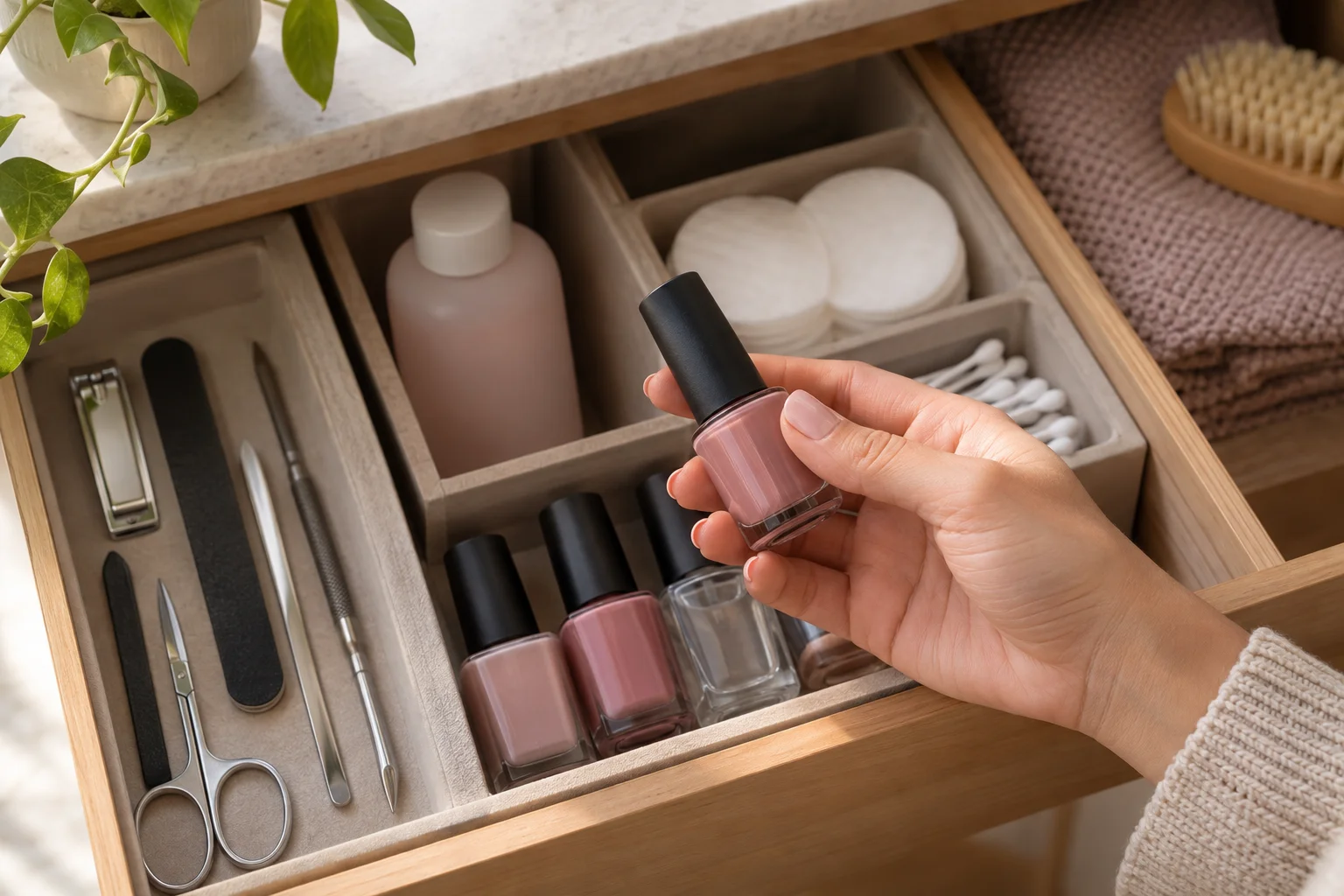
- Choose your priority. Is it frequent color changes, fewer coating products, or a coordinated routine you are willing to maintain?
- Write out the application sequence. List every required bottle, coat, and waiting interval. This makes the commitment clearer than “one-step” or “longwear” marketing.
- Check your existing supplies. Count a bottle toward the new routine only when the instructions support using it. Keeping a satisfactory lacquer routine is also an option.
- Include maintenance and removal. Make sure you understand what happens after the initial application, including any topcoat refresh tied to a wear claim.
- Compare the actual basket cost. Include the required companion products and removal supplies you do not already own. Bottle count alone cannot establish value.
Among the documented examples, Gel by essie fits a preference for a coordinated color-and-topcoat routine without a base-coat step. Infinite Shine fits a willingness to follow a base/color/topcoat sequence with explicit waiting intervals. Quick-dry color is worth investigating when simplicity matters more than an extended wear claim, but confirm the individual product’s requirements first.
For more guidance on choosing supplies, explore Nail Products & Tools resources.
Buy the routine you want to repeat. Check required bottles, coating applications, drying language, compatibility, and removal before comparing wear claims. A gel-like finish is not, on its own, a reason to buy a lamp—or to replace polish that already works for you.