
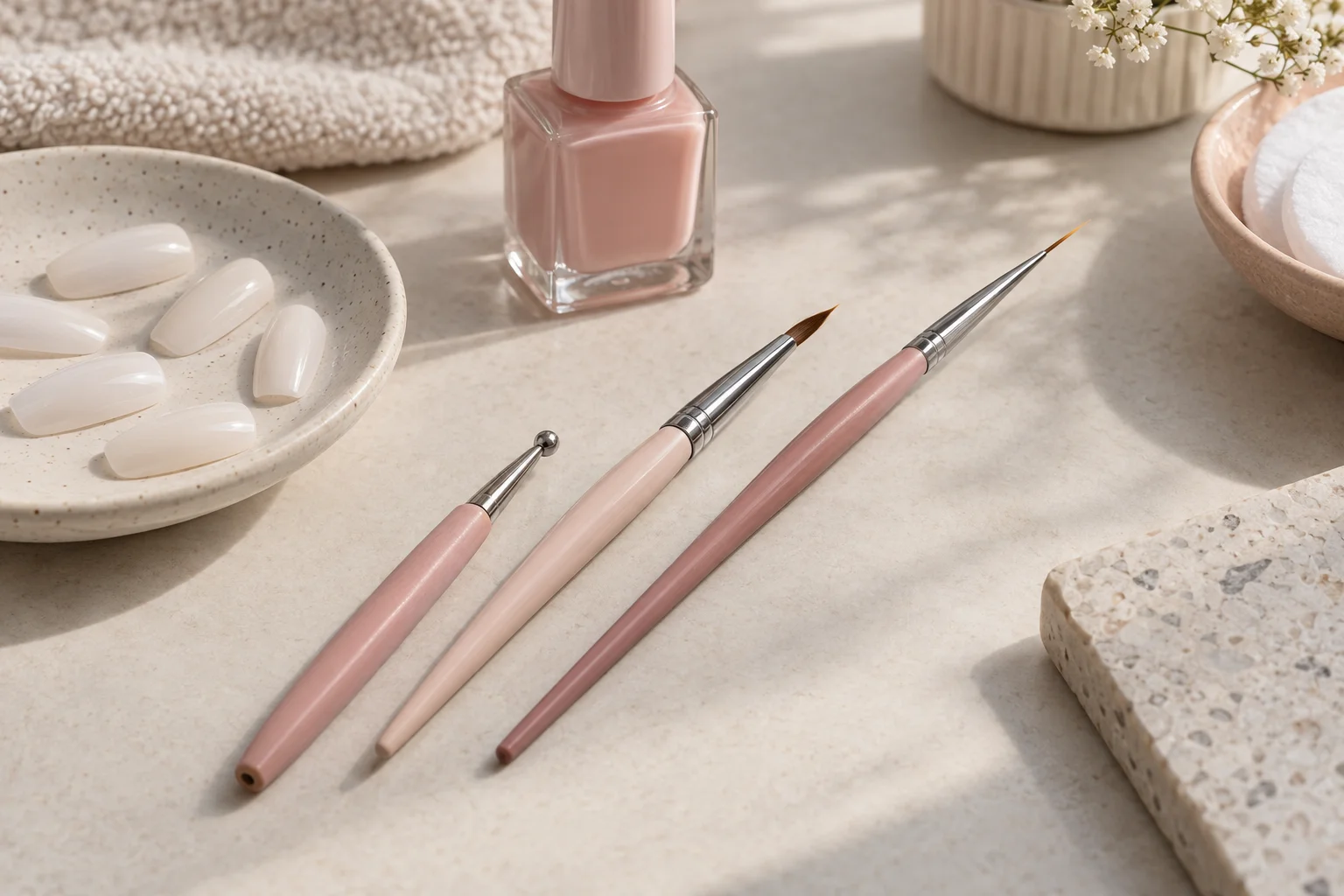
Start with the design you want to make: a dotting tool for dots, or a liner or striping brush for lines, swirls, and stripes. For small painted motifs, investigate a detail brush—but check demonstrations and dimensions rather than buying by name alone. You do not need to commit to a large kit to explore one design.
This guide compares manufacturer descriptions and instructions, not hands-on tests. Product examples illustrate functions and purchasing formats, not proven durability or ease of use. The focus is beginner nail art tools for regular, air-drying polish; compatibility and care still need to be confirmed for the exact tool you choose.
Choose the design before the tool
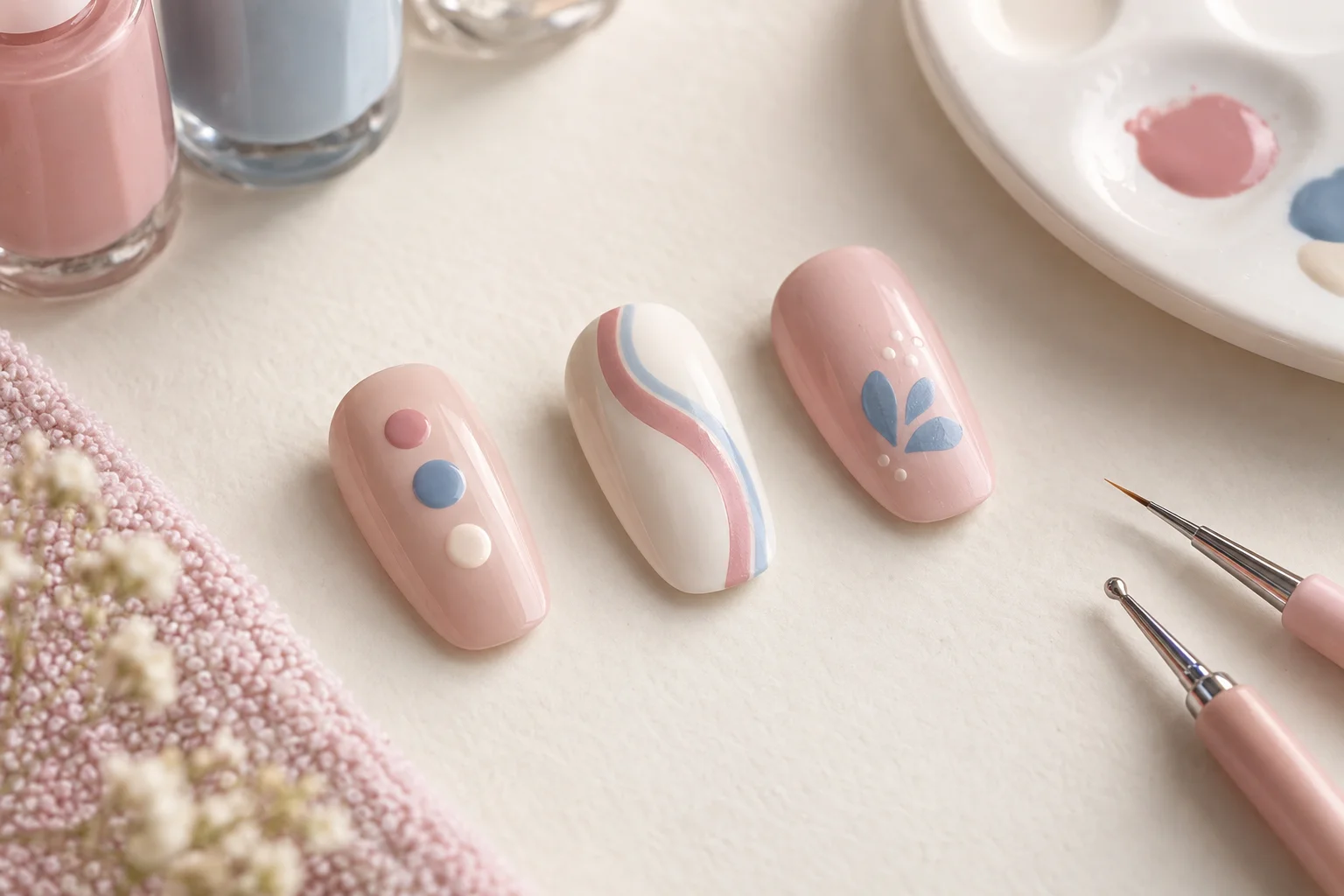
Save two or three designs you would actually like to attempt. Look at their individual marks: separate dots, continuous lines, or small painted shapes. Use those marks as your shopping brief.
| Your design goal | Tool to investigate | Buying check |
|---|---|---|
| Dots or dot-based accents | Dotting tool | Working-tip sizes and regular-polish instructions |
| Lines, swirls, or stripes | Liner or striping brush | Bristle dimensions, polish compatibility, and care directions |
| Small painted motifs | Detail brush | A demonstration resembling your design, using your intended medium |
| Dots and linework | Separate tools or a dual-ended option | Whether both working ends serve a planned design |
These are selection criteria, not a ranking of beginner difficulty. The available evidence does not establish how quickly a beginner will learn each tool or which detail-brush shape is best for a particular motif.
What the tool descriptions establish
Dotting tool: a direct match for dots
Sally Hansen’s Salon Pro Tool Kit instructions demonstrate dotting with Insta-Dri polish. That gives this guide a documented regular-polish example, not proof that every dotting tool produces the same results.
If your saved designs consist mainly of dots, start by comparing dotting tools rather than brush collections. Look for the actual tip sizes offered. Your first practice question can be simple: can you place a row of dots where you intended?
Liner or striping brush: for continuous marks
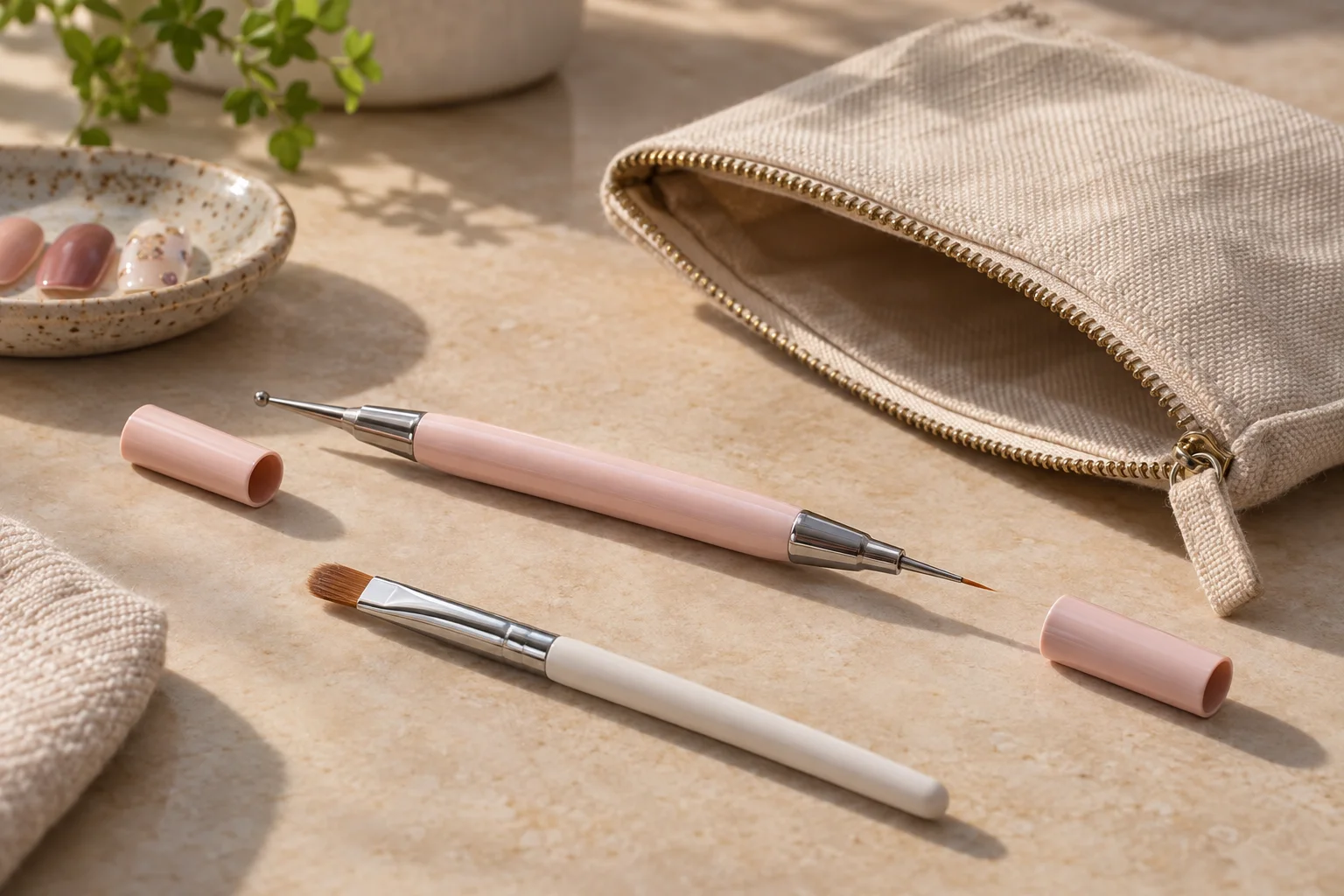
LeChat describes the slim, long liner on its Dual Sided Tool Liner & Dotting as intended for lines, swirls, and stripes. Its opposite end is intended for circular dots.
The retrieved description does not explicitly confirm regular-lacquer compatibility, so this is a format example—not an unconditional recommendation for air-drying polish. When comparing candidates, look for published bristle length and width and a demonstration using regular polish. Consider the control you want to practice: where a stroke begins, changes direction, and ends.
Detail brush: the name is not enough
Sally Hansen lists a Detailer Tool separately from its Striping Brush in the kit contents, but the retrieved page does not provide dimensions or a detailed comparison of their uses.
If miniature motifs are your goal, ask for a demonstration resembling the shapes you want to paint. Check the medium used in that demonstration as well as the brush. An elaborate finished manicure alone does not establish what a first-time user can achieve—or whether the pictured technique uses regular polish.
Individual tools, dual-ended options, and kits
Choose an individual tool when one function dominates your plans. For dotted accents, compare dotting tools first. Put brushes for unrelated designs on a later list rather than treating them as essentials.
Consider a dual-ended tool when you want both functions. LeChat’s documented example combines a liner and dotting end on one handle, with caps at both ends. That establishes a two-function alternative to separate handles; it does not establish better balance, easier cleaning, or longer life.
Consider a compact kit when several contents have a clear purpose. Sally Hansen’s three-tool bundle contains a Marbling + Dotting Tool, Detailer Tool, and Striping Brush. Compare those specific functions with your design list—not simply with the piece count of another set.
For example, suppose you want dotted accents now and striped tips later. Your options include a dotting tool alone, separate dotting and liner tools, or a compatible dual-ended tool. If the combination tool’s polish compatibility is unclear, its extra function is not yet a reason to buy it.
Neither bundles nor individual purchases are automatically cheaper. Compare the checkout total, including delivery and required cleaning supplies. Also check return terms and whether the manufacturer offers a usable support contact. A low price does not resolve an unanswered compatibility question.
Treat cleaning requirements as a buying criterion
Before choosing a brush, establish both what you can paint with it and how the maker says to remove that material afterward. Do not assume every nail art brush supports every polish, gel, or cleaning solvent.
The retrieved search excerpt for the Whats Up Nails Pure Color #10 Detail Brush mentions nail polish remover or “gentle acetone” for cleaning when working with nail polish. That is product-specific guidance from a partial excerpt, not a complete cleaning routine. Confirm the full directions and any exceptions with the brand before acting on it.
The retrieved Sally Hansen and LeChat pages do not supply detailed cleaning directions. This does not mean instructions are unavailable elsewhere; it means these pages cannot establish a care routine for the tools.
Before ordering, ask:
- Is this exact tool intended for regular, air-drying nail polish?
- Which cleaner is permitted, and are there restrictions on soaking or contact time?
- How should the working end be dried, protected, and stored?
- Where can I read the complete care instructions?
If the answer is unclear, keep comparing rather than borrowing another brand’s cleaning method. Similar-looking brushes do not establish shared care requirements.
A practical first-order checklist
- Name one design. Write “dotted accents” or “one curved stripe,” rather than “learn nail art.”
- Identify its required marks. Choose the tool function that matches them; defer unrelated extras.
- Confirm the polish system. Look for explicit regular-polish instructions. If you are also choosing color products, see how to choose no-lamp nail polish.
- Resolve specifications and care. Check tip or bristle measurements where provided, permitted cleaners, and storage directions. Ask about gaps that affect your choice.
- Compare the full purchase. Include required supplies and delivery, then review return terms and product support.
- Set a practice goal before buying more. Decide what you want to learn with this tool and what would justify another one.
A useful next purchase solves a specific need: a different documented tip size, a brush demonstrated for a new motif, or a separate handle for a function you regularly use. “More pieces” is not a design goal.
Frequently asked questions
What if I want patterned nails without practicing brushwork?
You can explore decorative adhesive wraps rather than buying more brushes. The guide to applying no-lamp nail wraps explains product-specific sizing and finishing considerations. If you prefer hand-painted art, ask a nail professional whether they offer your intended design with regular polish.
Buy for one design first. A dotting tool is the direct starting point for dots; a lacquer-compatible liner is worth investigating for linework. For miniature motifs, require a relevant demonstration before choosing a detail brush. Add a kit only when its contents match your plans, and resolve cleaning requirements before checkout.